How FallSena is made
FallSena is a wearable fall detection device built around an ESP32-C6 microcontroller (Wi-Fi and Bluetooth Low Energy) and an MPU6050 motion sensor. It is worn at the waist, watches for a fall, gives the wearer a short window to cancel a false alarm, and otherwise alerts a caretaker's phone app.
FallSena started from a worry many families share: that a loved one may fall and not get help in time. It is designed to shorten that wait by notifying the caretaker through their phone as soon as possible.
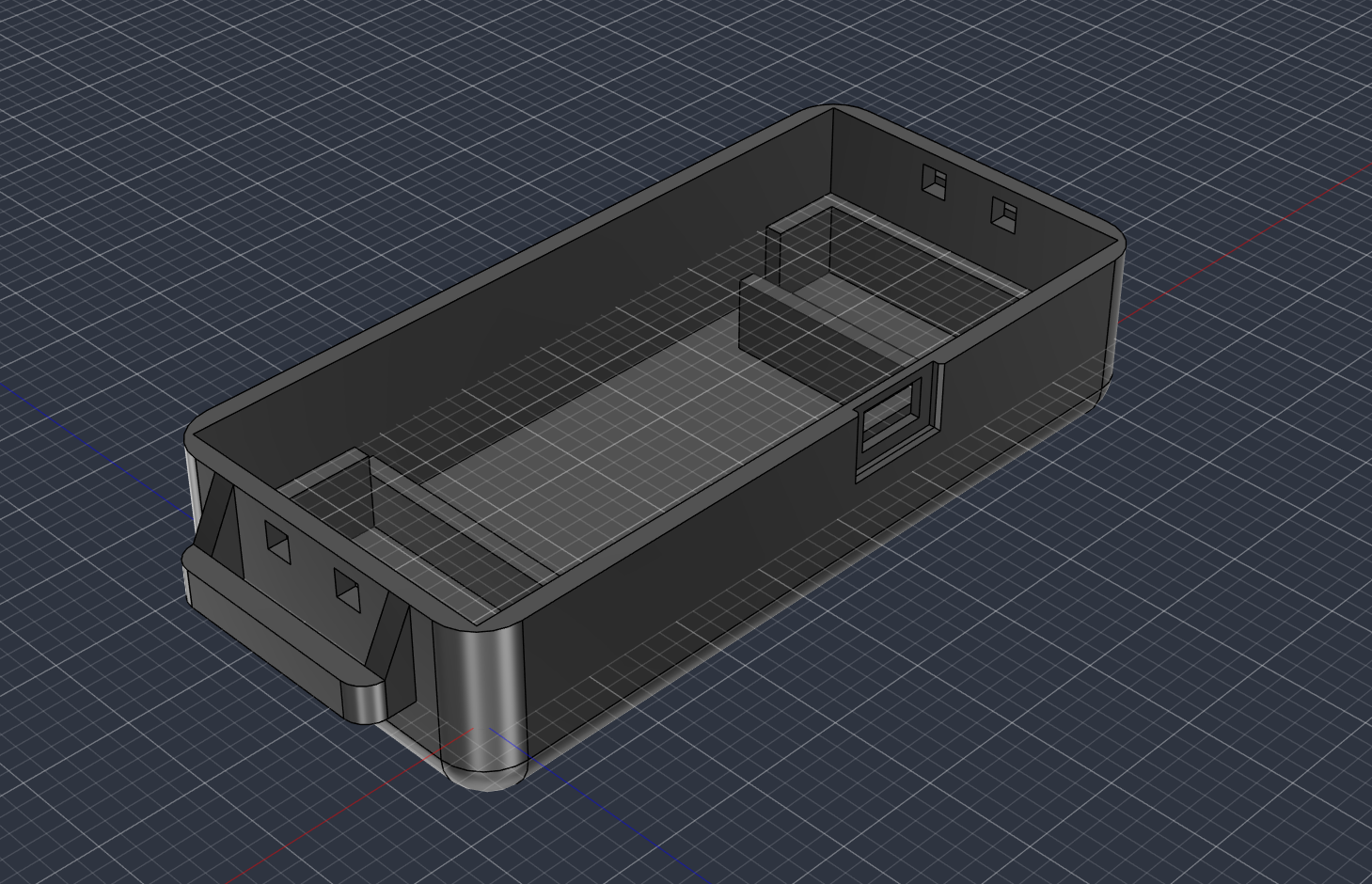
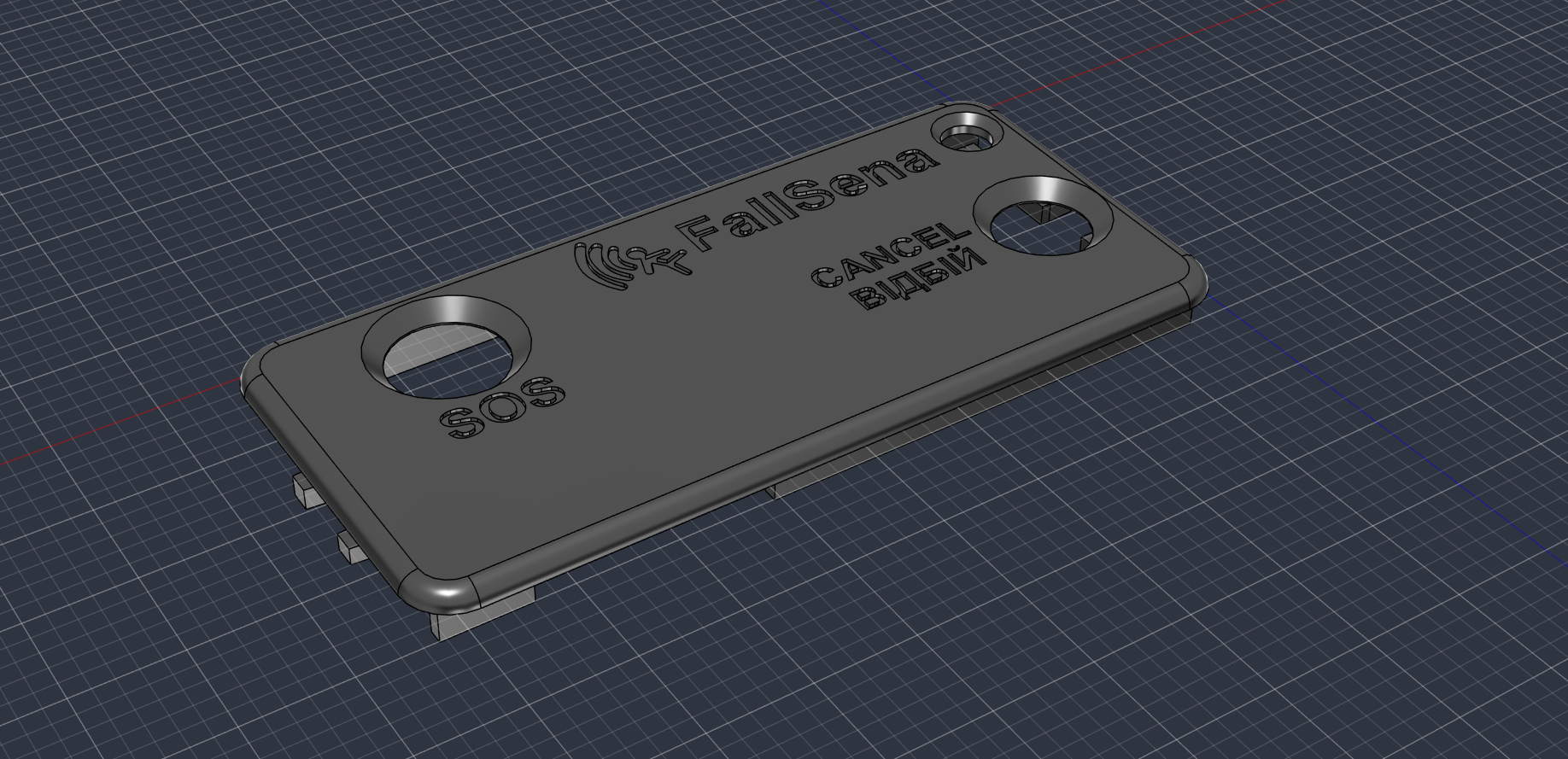
3D modeling the enclosure
The enclosure is made of two parts: a case that holds the electronics and a lid that closes over it. The lid has openings for the SOS and Cancel buttons, and the whole enclosure is kept compact so it can be worn at the waist.
Both parts were 3D-modeled in Fusion 360, with the FallSena logo and button labels modeled directly into the surface of the lid.
The renders show the two parts as modeled: the open case, and the lid with its button openings.
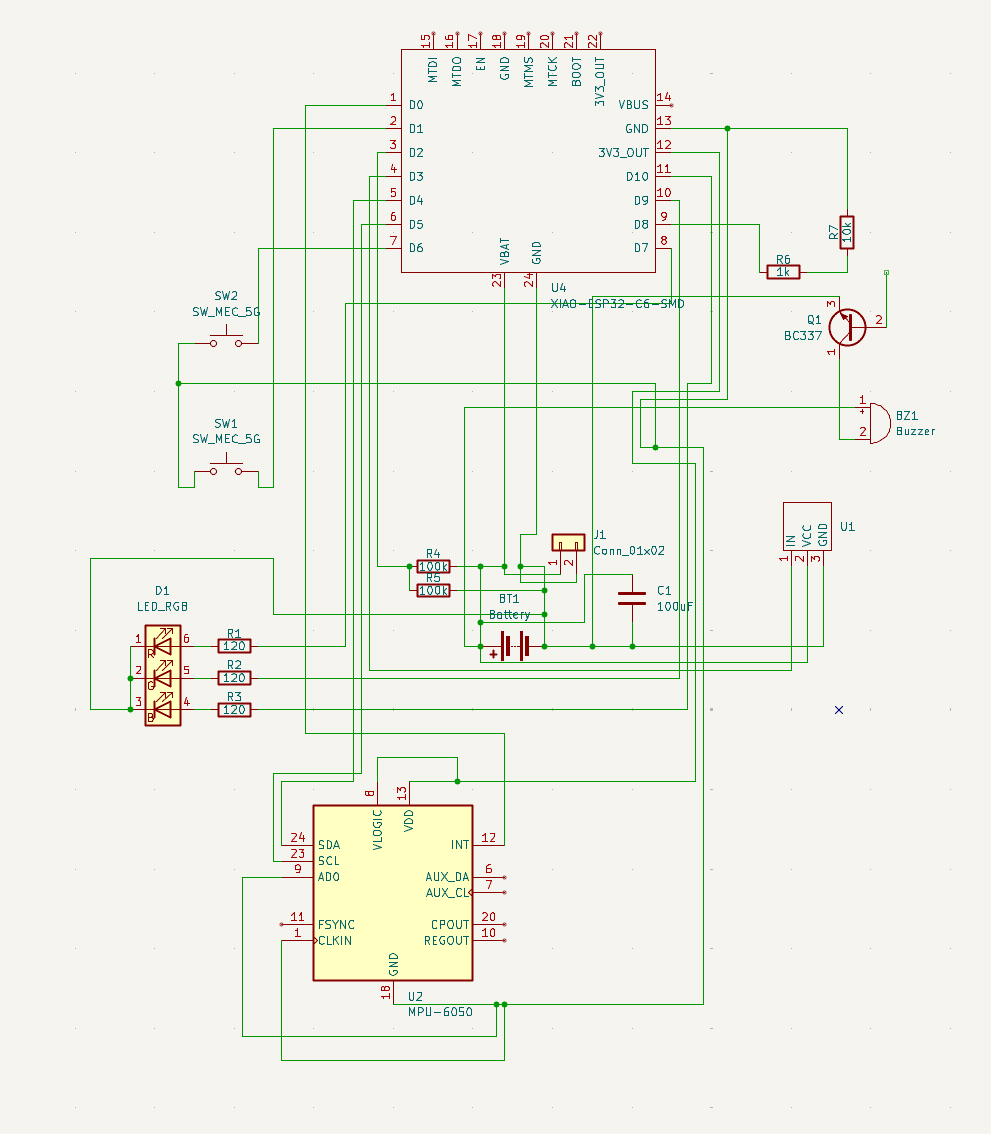
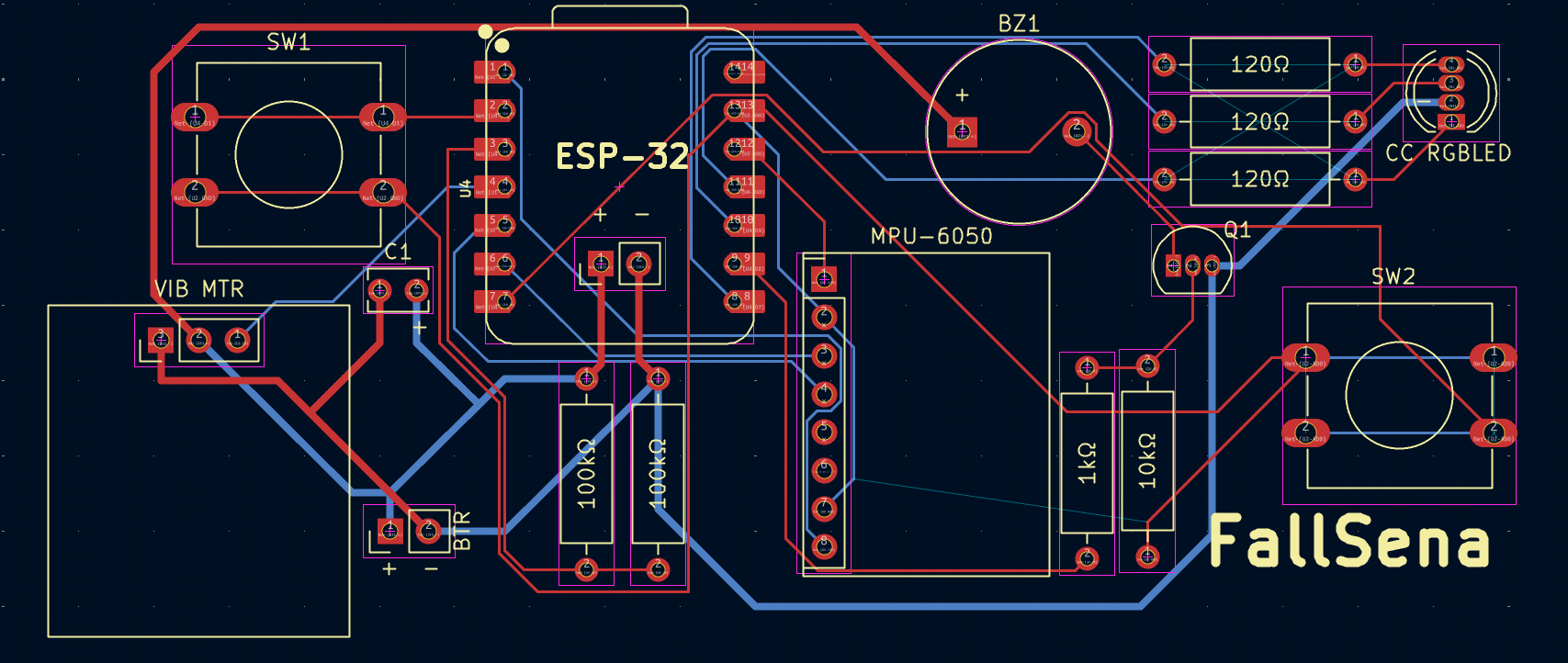
PCB design
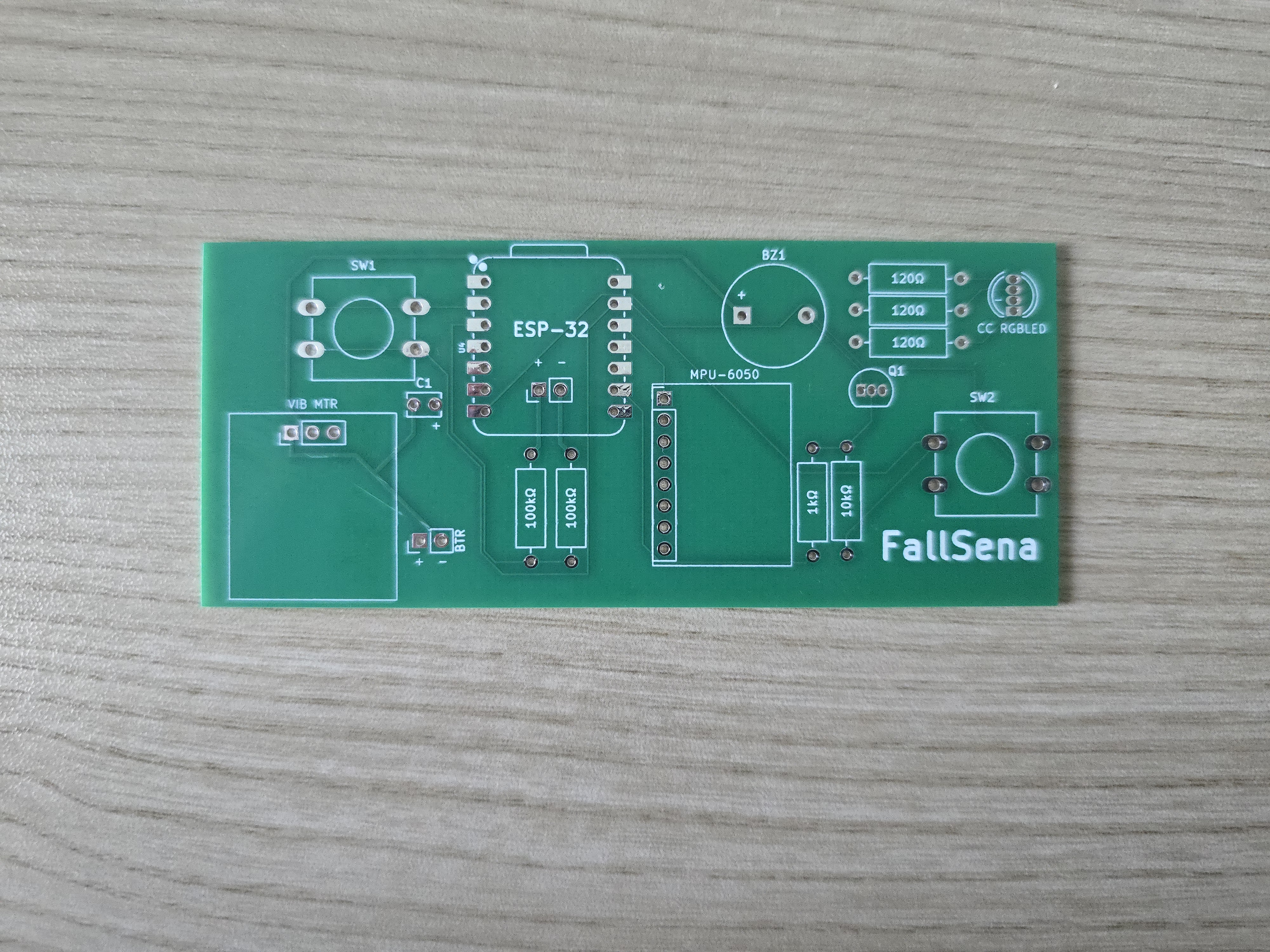
A custom circuit board puts all of FallSena's parts on one board, sized to fit inside the waist-worn case.
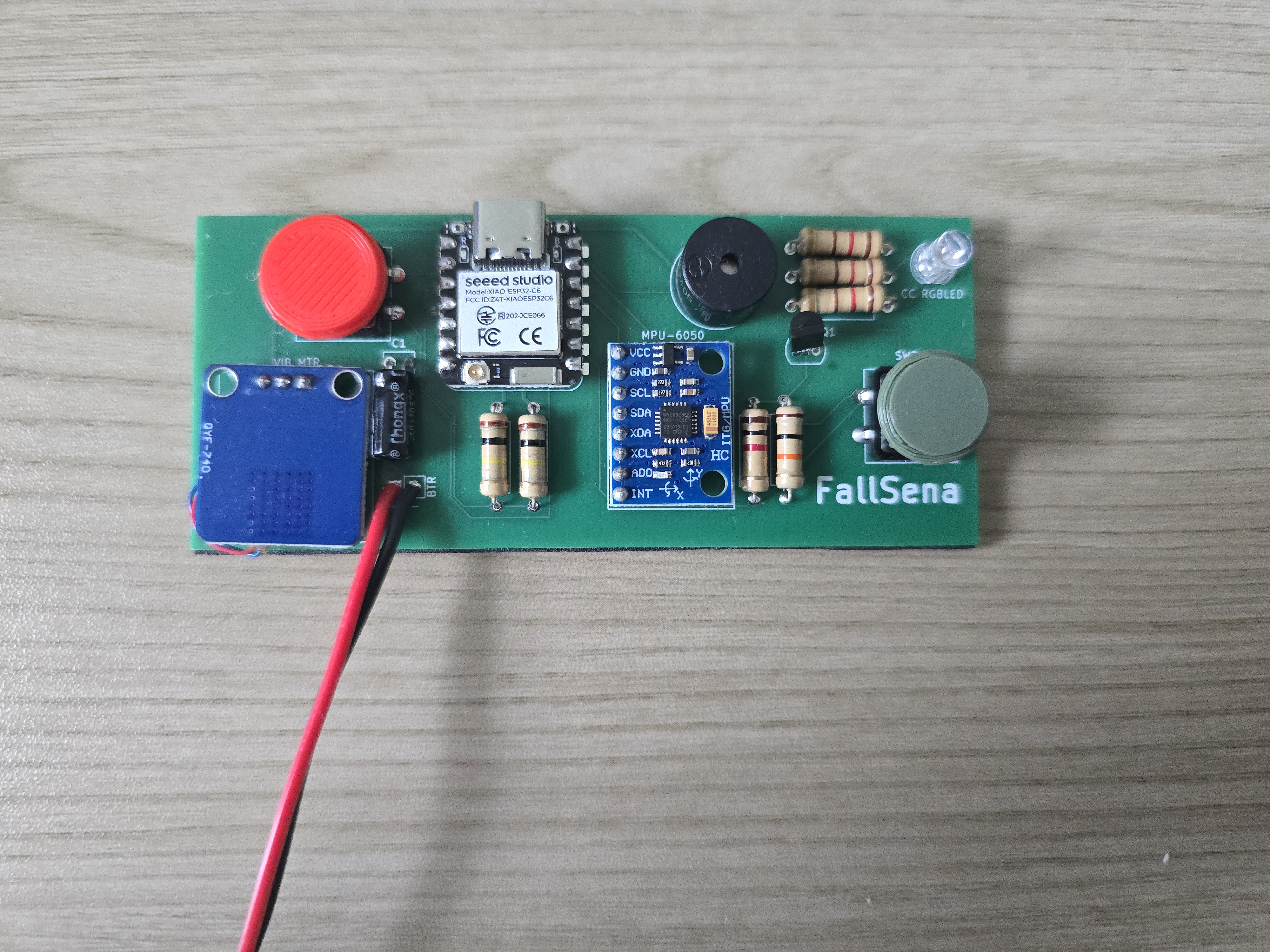
The board is built around an ESP32-C6 microcontroller for Wi-Fi and Bluetooth Low Energy, an MPU6050 motion sensor connected over I2C, an RGB status LED, a coin vibration motor, SOS and Cancel buttons, and a 3.7V 1000 mAh LiPo battery with a voltage-divider circuit for battery-level sensing.
Both the schematic and the board layout were designed in KiCad. In the layout, the parts are arranged along one long, narrow board with a button near each end.
Soldering and assembly
Before any parts were soldered on, the bare board already shows the outline and label for each part, along with the FallSena name.
Each part was then soldered into its place, with the battery connected by a pair of red and black leads.
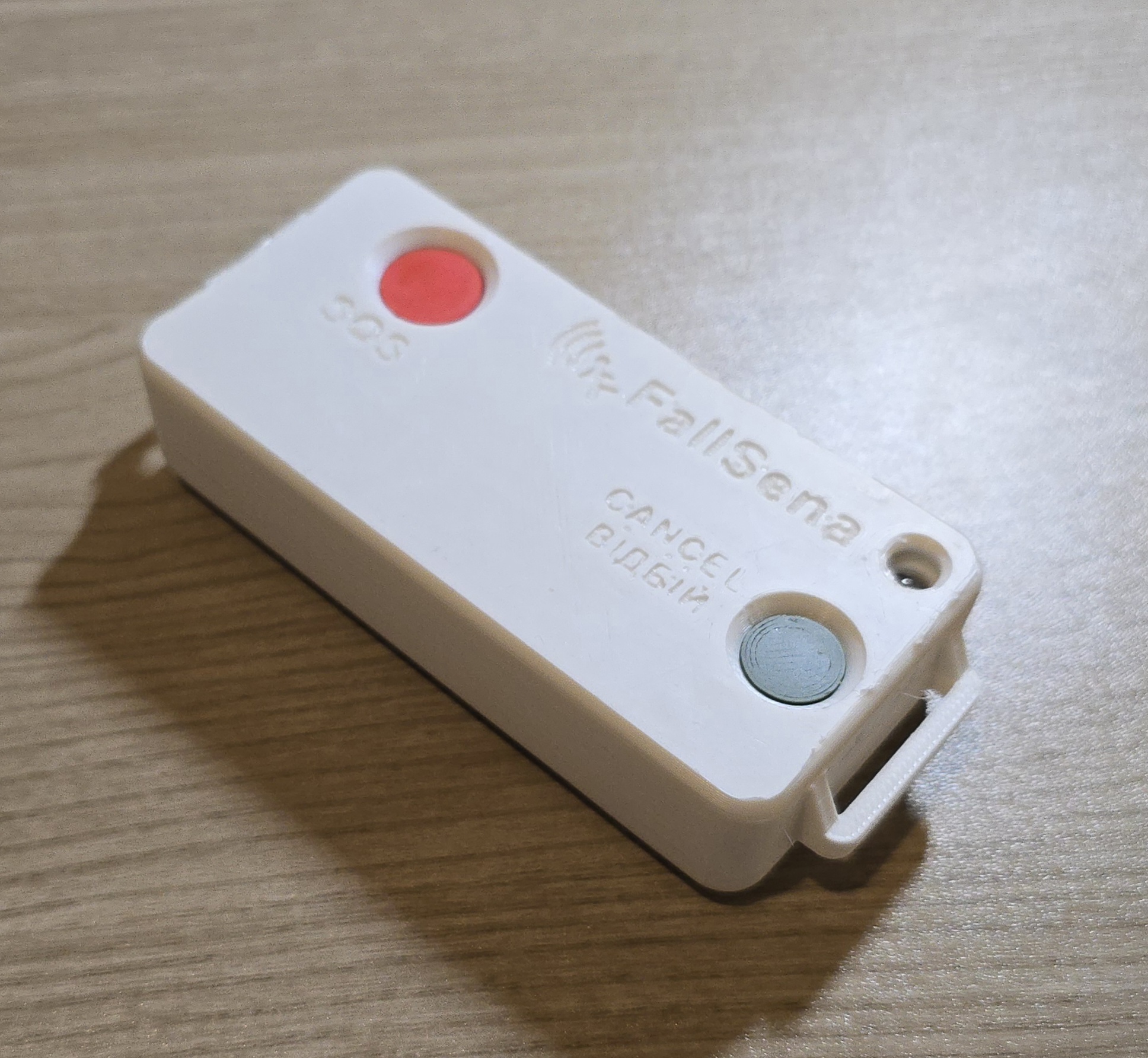
The finished board goes into the case, with its two buttons lining up with the openings in the lid.
The final product
Once assembled, FallSena is a small device worn at the waist that watches for a fall, gives the wearer a short window to cancel a false alarm, and otherwise alerts a caretaker's phone app.
What's next
Next up is controlled-drop testing to fine-tune the fall detection threshold, along with verifying that the caretaker alert arrives within seconds. Deep sleep with motion wake-up is planned to extend battery life, as is bringing the caretaker app to iOS.